
Orthopedic documentation demands precision — specific joints, laterality, range of motion in degrees, mechanism of injury. Vague doesn’t work here. PracticeStudio is structured the same way your practice is: exact, efficient, and built to hold up from first presentation through surgical clearance.
See Alma AIPracticeStudio’s orthopedic roots started with a practice right here in Texas. What we found was that orthopedic workflows are more defined than almost any other specialty — from acute presentation through conservative care to surgical clearance to rehab, the process is well-mapped. So we built the software to match it. Every step has a place. Nothing has to be improvised.
Right knee versus left knee. Active ROM versus passive. 120 degrees versus 115. Orthopedic documentation is precise because it drives treatment decisions, surgical planning, and legal defensibility. Generic EHRs weren’t built to hold that standard.
Prior authorization. Multiple procedure modifiers. Scheduled substance prescribing. Orthopedic billing is complex by nature — and when the back end can’t keep up with the clinical side, revenue suffers.
Acute injury to conservative care to surgical clearance to rehab — that’s months of encounters, and the documentation thread has to stay intact the entire way. Fragmented records mean fragmented care and fragmented reimbursement.
ROM captured in degrees — active and passive, left and right, by joint. Select the value, the documentation generates. No translating physical measurements into narrative after the visit.
Knee, shoulder, hip, ankle, elbow, wrist — each with a dedicated examination screen built for that joint. Not a generic template applied six different ways.
Pre-operative documentation lives alongside every other encounter. Pain scales, injury history, prior treatment, imaging — structured and available to the surgical team without hunting across systems.
Electronic Prescribing of Controlled Substances for practices that manage post-operative and chronic pain. Prescription management without leaving the chart.
Acute knee injury from a basketball landing. Three days of progression from unable to bear weight to walking with a limp. Alma documented all eight HPI fields — anatomy, mechanism, quality, severity, timeline, context, modifying factors, associated symptoms — with clinical precision. Then filed the neurovascular denial in the Review of Systems, SNOMED coded, without being prompted. Because that’s what a complete orthopedic record requires.
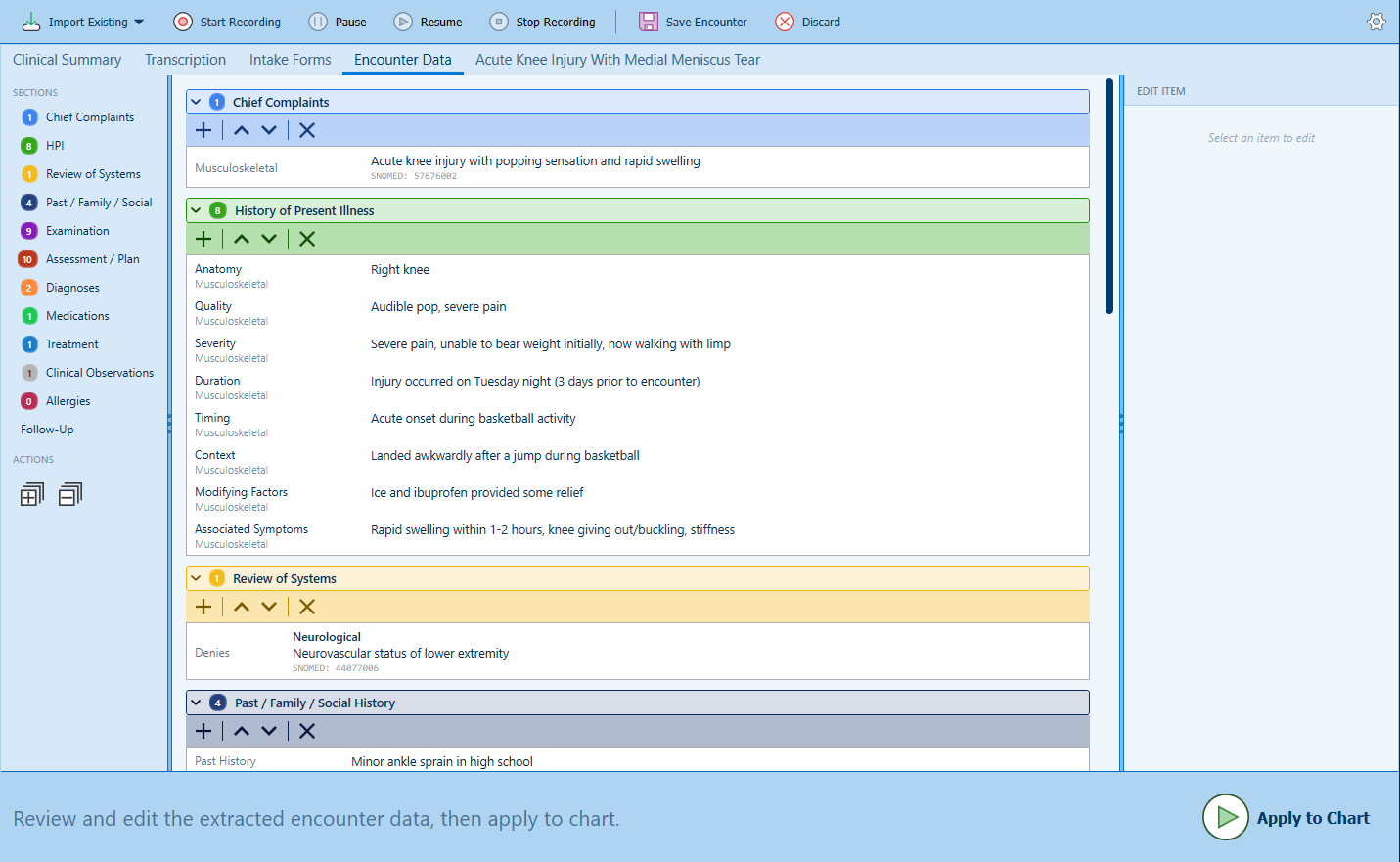
Eight HPI fields. Mechanism documented precisely. Neurovascular denial SNOMED coded. All from a single ambient recording during the visit.
We’ll walk through a complete orthopedic encounter — knee exam, ROM documentation, Alma AI, surgical H&P — and show you what the billing side looks like while we’re at it.